

Election on the Occupied Territories: a Hobson's Choice case
20.02.2024

The upcoming presidential elections in Russia, set for March 2024, are looming large on the horizon. Notably, President Putin, who has been in power for the past two decades, recently amended the constitution, effectively paving the way for him to extend his tenure until 2036. Given his longstanding dominance in Russian politics, it's widely anticipated that Putin will retain his grip on power.
These constitutional changes not only solidify Putin's prolonged rule but also facilitate the annexation of captured territories into the Russian Federation, potentially through the electoral process. It's a move that raises international concerns, as it seemingly exploits the electoral framework to legitimize the occupation of Ukrainian territories.
Russia's narrative insists that the inhabitants of these temporarily occupied territories (TOT) support the new regime and endorse their integration into the Russian Federation, citing a controversial fictitious referendum held in 2023. However, doubts persist regarding the authenticity of this supposed support, especially considering the coercive tactics employed by the occupying forces.
But do Ukrainians who are under occupation want to take part in the elections, and how is Russia going to control the electorate in the TOT?
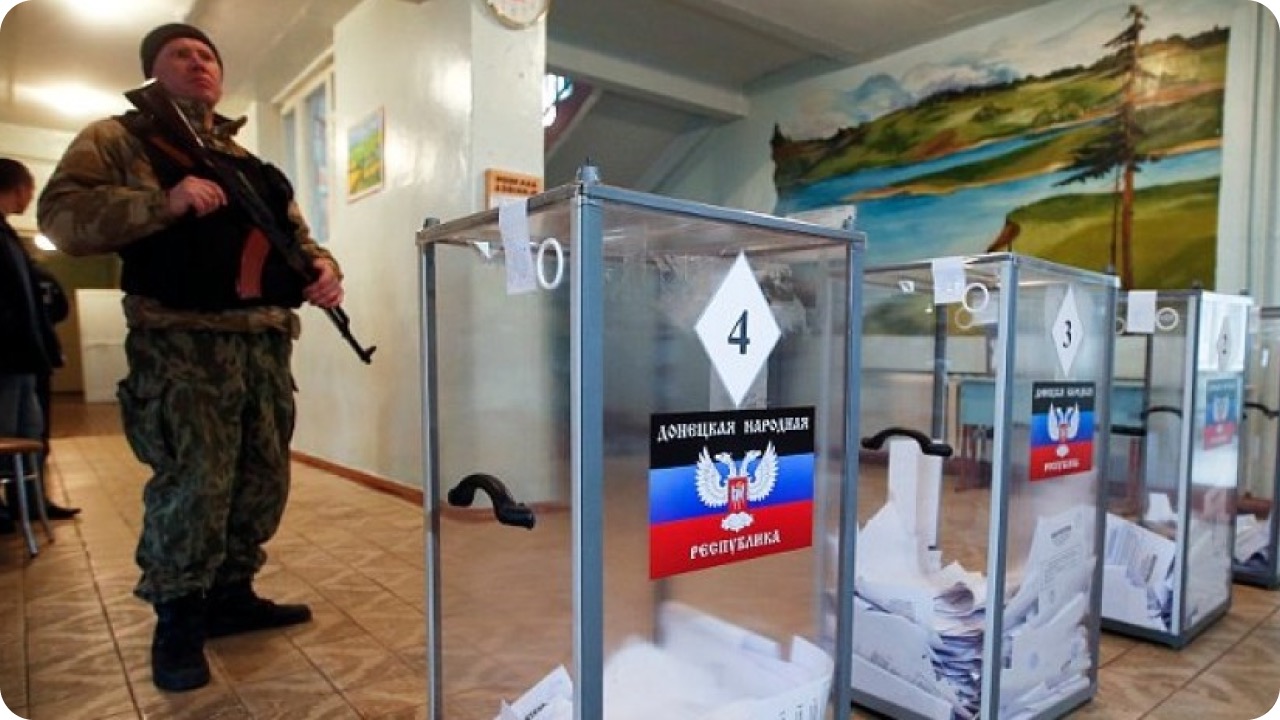
According to confirmed information, a video surveillance system will be implemented at the election precincts in the occupied territories. This is done to strictly monitor the election process. It also makes real voting impossible - no pro-Ukrainian voter will risk their life and the lives of their loved ones.
It also became known that early voting will be held in the occupied territories of Ukraine: the main election session is scheduled for March 15-17, and it may be held earlier on the TOT. Exact dates will be set by the occupation administration. However, the interesting thing here is not when the elections will be held but who will vote on behalf of the population of the occupied territories, which, in addition to the locals, will be soldiers of the Russian army and Russian civilian contractors. Doesn't sound like a free will for fair results, does it?
While the preparations for the elections are still underway, the occupation authorities continue to intimidate the civilian population, using the “Rosgvardia” soldiers. In this way, they will reduce the percentage of those who could come to the elections and vote against Putin or organize pro-Ukrainian events to zero.
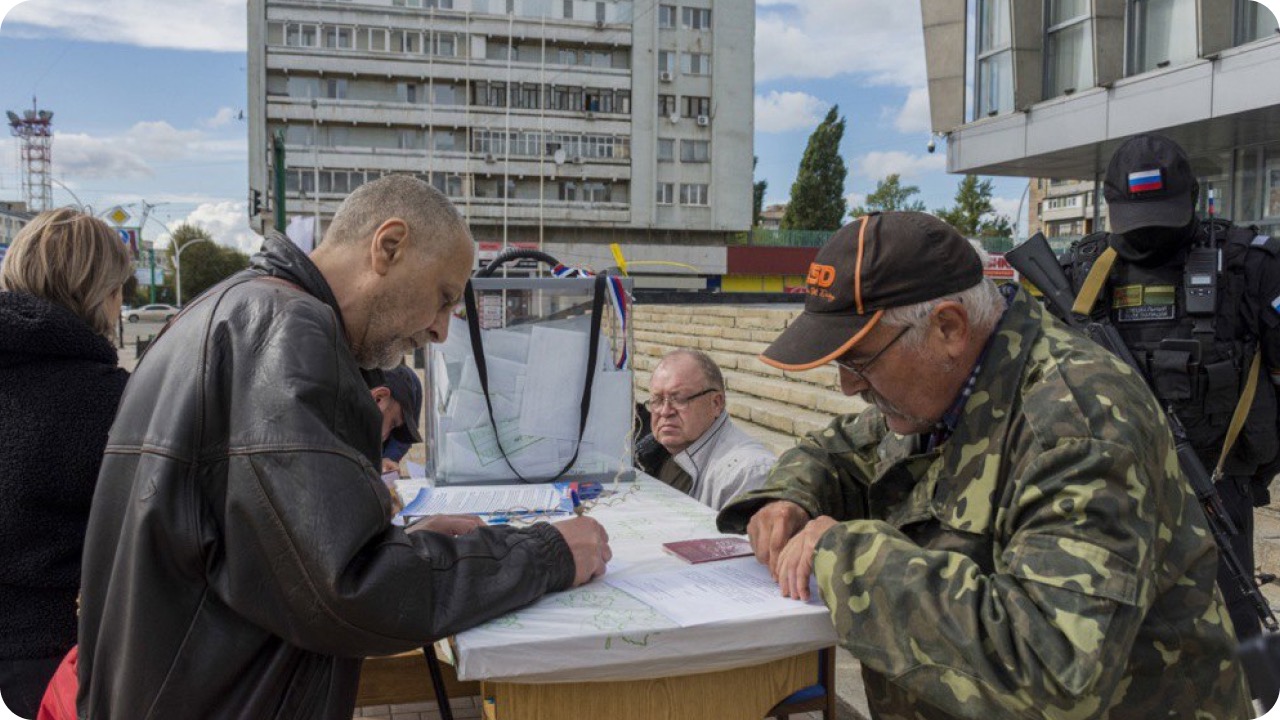
Despite these efforts to maintain a facade of democracy, the outcome of the elections seems predetermined, with the Kremlin openly asserting Putin's irreplaceable role in Russian politics. Consequently, the credibility of the electoral process, particularly in the occupied territories, remains highly questionable.
For the international community, these territories remain unlawfully annexed parts of Ukraine, regardless of Russia's attempts to assert its sovereignty over them. Therefore, the forthcoming elections in Russia serve as a stark reminder of the ongoing conflict and the challenges to democracy in the region.