

Debunking Misinformation Regarding Russia's Invasion of Ukraine
17.10.2023

From its illegal annexation of the Crimean peninsula in 2014 and its large-scale invasion of Ukraine on February 24, 2022, Russia has waged a sustained and coordinated state-controlled disinformation campaign targeting the Russian population, Russia's neighboring countries, and the rest of the world, mainly aiming at influencing public opinion.
The most common lies in the Russian narratives that they continue spreading around the globe to fulfill their interests:
1. Ukraine is not a real state but a historical part of Russia.
Russian propaganda narrative:
Russia does not recognize Ukraine as a separate state, and Ukrainians as a separate people. Promoting the narrative about fraternal peoples, inferior Ukrainians, and the inauthenticity of the Ukrainian language and culture created a favorable picture for the Kremlin – the Ukrainians got lost and must be returned home.
The fact:
The frequently asserted notion that Ukraine and Russia constitute 'one nation' stands as an enduring yet unfounded myth employed against Ukraine. Even when viewed through a long historical lens, this assertion lacks validity. For centuries, Ukraine has maintained a unique cultural and national identity, making Putin's aggressive efforts to forcibly integrate Ukrainians into Russian culture all the more reprehensible, particularly in light of the historical persecution of Ukrainian nationals during the Soviet Union era.
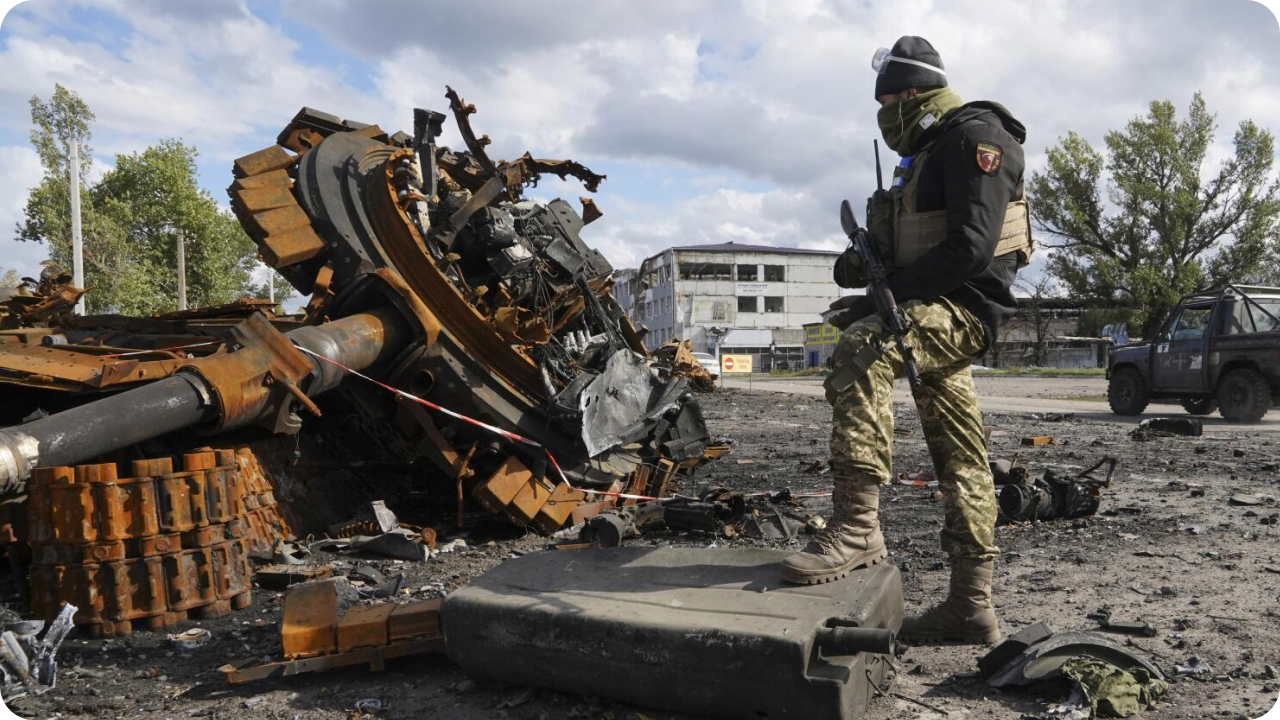
2. Ukrainian government is full of Nazis.
Russian propaganda narrative:
After 2014, the Revolution of Dignity and the change of power in Ukraine, Russia began to promote the story of the illegitimacy of the new government. Like, the Nazis came to power, who abuse ordinary Ukrainians and commit terrible crimes, especially against the Russian-speaking population. And that now it is necessary to go and save these people.
The fact:
Russian propaganda employs baseless comparisons to Nazism and World War Two, crafting narratives designed to evoke negative emotions among its target audiences. In actuality, there is no substantiated evidence to support claims of persecution or genocide against Russian-speaking or ethnic Russian residents in eastern Ukraine by Ukrainian authorities. Reports from reputable organizations such as the Council of Europe, the UN High Commissioner for Human Rights, and the OSCE have validated this fact
3. Crimea joined Russia legally and willingly.
Russian propaganda narrative:
After the annexation of Crimea, Russia naturally tried to pretend that everything happened legally so that the international community would believe that it was so.
The fact:
In March 2014, the Russian-controlled Crimean parliament voted for a 'referendum' to join Russia. This questionable vote on annexation occurred without international observers and with armed Russian soldiers stationed at polling sites.
The so-called results, announced by Russian occupation authorities on March 16, 2014, claimed an overwhelming 97 percent in favor of annexation. However, multiple international reports have since exposed the results as fraudulent.
The annexation was met with widespread condemnation and rejection by Kyiv, the United States, the European Union, and most U.N. member states.
4. No Russians were in Donbas in 2014 – it was a civil war.
Russian propaganda narrative:
After the Russian invasion of the Donetsk and Luhansk regions and the occupation of part of the territory of Ukraine, Russian propaganda began to talk about the civil war in Ukraine, to which it has nothing to do.
The fact:
The occupation of cities within the Luhansk and Donetsk regions occurred in several stages. During March and April, armed individuals either infiltrated or seized control of government structures in various cities across these regions. Concurrently, a group of militants led by Igor Girkin, a former Russian FSB officer, took formal measures to establish their presence in cities to the north of Donetsk.
A digital forensics agency based in London has reported the accumulation of substantial evidence that Russia's military participated in the armed annexation that transpired in August and September 2014 in the vicinity of Ilovaysk, situated in eastern Ukraine. This conflict resulted in the defeat of Ukrainian forces, who faced a combined force comprising Russian and separatist troops.
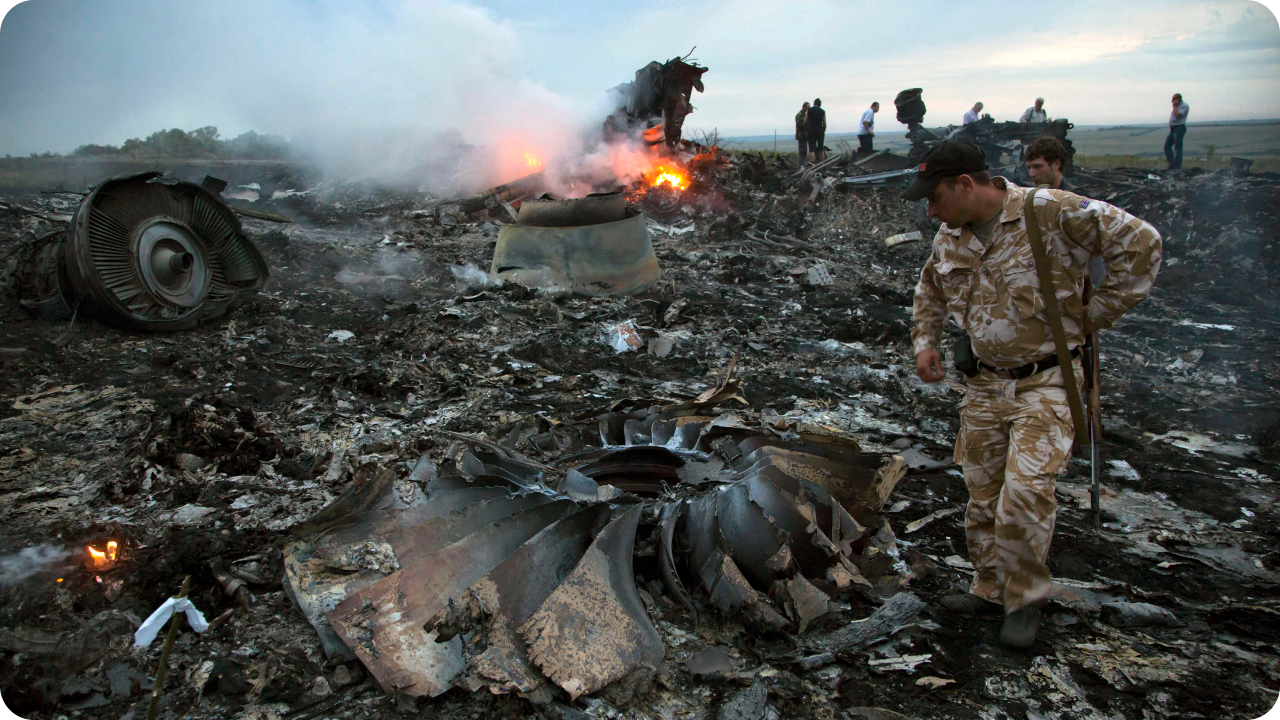
5. Ukraine is conducting genocide against the Russian-speaking population in the East.
Russian propaganda narrative:
Russia is trying to prove to the whole world that Russian-speaking people are being killed in Ukraine on the territory of Donbas. That atrocities are committed, the crucifixion of children, the bombing of peaceful cities, and the murder of hundreds and thousands of innocent civilians.
The fact:
None of the multiple reports on the human rights situation in Ukraine, which are regularly published by the UN High Commissioner for Human Rights, or the reports on the human rights situation in Ukraine come even close to referencing genocide in Ukraine.
6. Ukraine itself is to blame for the current full-scale war because it provoked Russia.
Russian propaganda narrative:
"Ukraine provoked Russia" - and that is why the latter invaded an independent and sovereign country, and began bombing cities and civilian infrastructure, killing people and erasing the nation from the face of the earth. Russia says that Ukraine is to blame for this.
The fact:
The current full-scale invasion began when Russian troops entered Ukraine on February 21, shortly after Putin, during a televised speech, announced a "special military operation" in Ukraine. Russia started the fighting and triggered an ongoing escalation when it crossed into Ukrainian territory.
Ukraine was striving to implement the Minsk Agreements, but the Moscow-backed military formations there were constantly disrupting their implementation.
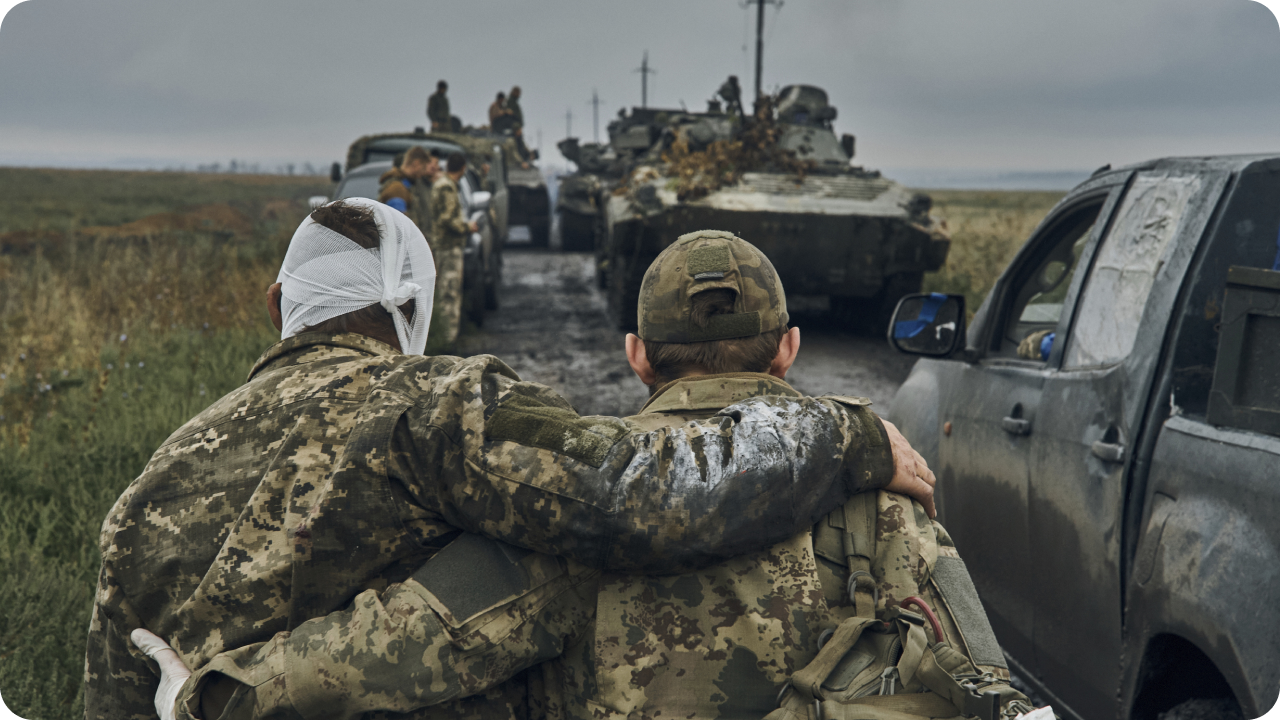
7. Because of NATO's aggressive expansion, Russia is now 'encircled by enemies' and needs to defend itself.
Russian propaganda narrative:
"We must stop NATO in Ukraine; otherwise, it will attack Russia." Russia hides behind an imaginary struggle with NATO, which apparently promised not to accept new member states. Of Russia's 14 neighboring countries, only 5 are part of NATO, and Ukraine is not one of them. But it is necessary to fight with NATO on the territory of Ukraine; only in this way, will Russia be able to defend itself.
The fact:
The assertion that NATO promised to abstain from enlargement fundamentally distorts the essence of the alliance. As a defensive coalition, NATO does not engage in "expansion" in an imperialistic manner. The decisions regarding NATO membership are left to the discretion of each applicant country and the existing 30 NATO member nations. In this instance, sovereign states retain the right to determine its course, and neighboring states, such as Russia, lack the authority to interfere.
Fact-checking is crucial
The truth is that in these propaganda myths, Russia is mirroring its own actions on Ukraine. Regarding Ukraine as part of its territory, Russia sought to take it at any cost, and faced with strong national resistance, resorted to full-scale invasion, bombing of cities, killing of civilians, and attempts to denigrate Ukraine in the eyes of the world community. And when it turned out that even though it was not very successful in achieving its goal, Russia blamed the West for its failures, doing everything to maintain a good image in a bad game.
Critical thinking and checking different resources to fact-check the information are enough to refute Russian propaganda. Therefore, remember to look for the truth in the pit of lies.