

The second “eyes” of the Armed Forces of Ukraine (AFU): What are thermal imaging cameras and why does our army need them?
12.08.2022

The war in Ukraine is still going on. In order to deter the occupiers from seizing new territories, our guys must arm themselves with not only courage, but also a whole arsenal of the latest technology. One of the key such gadgets is a thermal imager. In this material you will learn what kind of device it is, why it is needed at the front and what features you should pay attention to when buying it.
What are thermal imagers and how exactly do they work?
Thermal imagers are literally the "eyes" of our military, helping them detect the enemy at night. This device is able to recognize a human silhouette even in total darkness, during rain and thick fog. In this case, the image looks as clear as possible.
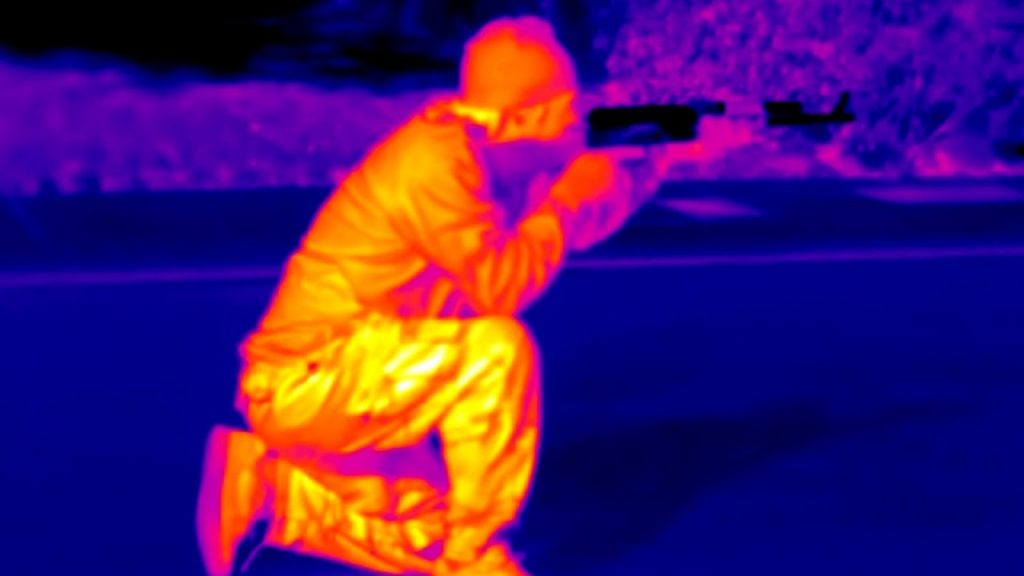
It’s basically a heat sensor that collects the infrared radiation and transforms it into electronic form for maximum convenience.
The lenses for thermal imaging cameras are made of a special material - germanium. It is this semi-metal that allows you to see a clear image, similar to a camera image. In addition to the matrix, the device has housing, control buttons and a battery compartment.
Today, thermal imagers are used in many areas, mostly related to the construction of living quarters and cars. Builders use them to find cracks with heat leaks. It is not uncommon for such devices to be used at customs to expose smugglers. Not surprisingly, thermal imagers have also become widespread in the military, as they can be much more effective at finding out the enemy’s locations.
What is the situation with thermal imaging cameras in the AFU?
In 2014, when Ukraine faced the armed aggression from the Russians for the first time, our army had almost no thermal imagers at all. In contrast to the enemy, who used a considerable number of thermal night vision devices, Ukrainian soldiers had only hunting devices that allowed them to observe only those objects that were within a radius of 5-10 meters. Another thing is thermal imagers, which can spot all at least slightly warm objects in front of them and show their direction of movement.
According to the charter, one military battalion holds approximately 5 kilometers of the front, although in reality the figure can be three times more. Its effective operation requires 7-10 devices: 1 for the reconnaissance unit and one for each of the mechanized platoons. But in reality the number of such groups is much higher. This is due to the environmental features, the number of enemy forces, building density and other factors. On the front line, just one battalion can have up to 40 posts, each of which needs a thermal imager.
The Armed Forces of Ukraine are trying to distribute thermal imaging cameras in such a way that they are primarily received by the fighters from the first lines of contact.
How to help the Ukrainian army to get thermal imagers?
Even with the active assistance of volunteers and foreign partners, night vision devices are still in short supply in our army. You can help guys to get such "eyes" by giving up your morning coffee and donating the saved funds to the "Pryame Vklyuchennya" charity fund. Another option is to initiate such a fundraising by yourself, for example, in social networks. In this case, you will need not only to report on the funds received and spent to your audience, but also to choose a really high-quality device that will help the AFU. Unfortunately, some volunteers buy thermal imagers for building, which, although expensive, do not allow you to see more than 25 meters into the darkness. To avoid getting into such a situation, we advise you to read about which "eyes" are better to buy and how much they cost.
The best thermal imaging cameras
In order to roughly know what features should have a thermal imaging device, we suggest using a comparison table of some of the best mobile (portable) thermal imaging cameras:
| IRay Xeye 2 E6 PRO V3 | Pulsar Axion 2 XQ35 | Infiray (Iray) Xeye 2 E3 MAX V2 | |
| Detection distance | 2600 m | 1300 m | 2200 m |
| Autonomous operation | Up to 6 hours | Up to 10 hours | Up to 7 hours |
| Matrix | VOx, 12um (≤25mk) | 17 µm (NETD <40 mK) | iRay Vox 12um |
| Diopter Adjustment | Yes | Yes | Yes |
| Field of view | 8.8°×7.0° | 10,7°×8° | 7.5°×5.7° |
| Zoom | 2.9 – 11.6 | 2 – 8 | x2, x4 (3.5-14.0) |
| Price | About $4,000 | About $3,000 | About $3,000 |
It is worth noting that in addition to mobile, there are also stationary thermal imagers. They differ in size and accuracy of temperature determination for objects from -20 to +20,000 degrees. Uninterrupted nitrogen supply is required for operation of such devices. Such devices are used at airports and customs, while the military prefers compact mobile gadgets weighing 350-600 grams.
Now you know that the thermal imager gives an advantage on the front line and makes it difficult for saboteurs to operate near the positions of Ukrainian soldiers. Do good - donate to the army!